Antenna Handbook | Best Antennas, Free Calculators & Top Antenna Deals

What is symbols are commonly used on circuit diagram ?

FIXED RESISTOR

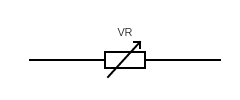
VARIABLE RESISTOR


POTENTIOMETER

THERMISTOR


LIGHT DIODE RESISTOR (LDR)


CAPACITOR (C)


VARIABLE CAPACITOR


TRIMMER CAPACITOR

POLARISED CAPACITOR

DIODE


ZENER DIODE

LED (LIGHT EMITTING DIODE)


PHOTODIODE

SCHOTTKY DIODE


RAIL


GROUND AND EARTH


DIRECT CURRENT

A direct current (dc) flows in one direction , either steadily or in pulses.:

Current (I)    - The quantity of electrons passing a given point (unit : ampere)

Voltage (V) - Electrical pressure or force (unit : volt)

Resistance(R) - Resistance to the flow of a current, (unit : ohm)

Power (P) - the work performed by a current , (unit : watt)

Potential Difference - the difference in voltage between the two ends of a conductor through which a current flows , also known as a voltage drop.

OHM'S LAW

Ohm's Law Helper Diagram 

A potential difference of 1 volt will force a current of 1 Ampere through a resistance of 1 ohm, or :

V = I x R

I  = V/R

R = V/I

P = I x V (or) I^2 x R

Resistor Networks

Resistor Networks: Complete Guide, Types, Calculations, and Applications

Resistor Networks: Complete Guide, Types, Calculations, and Applications

Resistor Networks are one of the most important and widely used building blocks in electronics. They appear in almost every electronic circuit, from simple voltage dividers to advanced digital-to-analog converters, microcontroller interfaces, radio frequency systems, and industrial control equipment.

A resistor network is not just a random collection of resistors. It is a carefully designed arrangement that allows engineers to control voltage, current, signal levels, impedance, and biasing with high precision. Understanding resistor networks is essential for students, hobbyists, technicians, and professional engineers.

In this comprehensive guide, we will explore what resistor networks are, how they work, the different types of resistor networks, their formulas, design considerations, real-world applications, and common mistakes to avoid.


What Are Resistor Networks?

Resistor networks are combinations of two or more resistors connected together in a specific configuration to achieve a desired electrical function. These resistors may be connected in series, parallel, or a mixture of both.

Instead of using individual resistors, engineers often use resistor networks to:

  • Divide voltage accurately
  • Control current flow
  • Create reference voltages
  • Set bias points for transistors and amplifiers
  • Match impedances in signal paths

Resistor networks can be built using discrete resistors or manufactured as integrated resistor network packages (SIP, DIP, or surface-mount arrays).


Why Resistor Networks Are Important in Electronics

Resistor networks simplify circuit design and improve reliability. Instead of calculating and placing many individual resistors, a properly designed resistor network ensures consistent performance, better tolerance matching, and reduced circuit complexity.

Key benefits of resistor networks include:

  • Improved accuracy due to matched resistors
  • Reduced PCB space
  • Lower assembly cost
  • Better thermal stability
  • Cleaner and more organized circuit layouts

Basic Types of Resistor Networks

Resistor Network Schematics

Series Resistor Network

R1 R2 R3

Parallel Resistor Network

R1 R2 R3

Interactive Resistor Network Calculator

Calculate equivalent resistance for series or parallel resistor networks.


Result:

1. Series Resistor Networks

In a series resistor network, resistors are connected end-to-end so that the same current flows through each resistor.

Total resistance:

Rtotal = R1 + R2 + R3 + ...

Series resistor networks are commonly used in:

  • Voltage divider circuits
  • Current limiting
  • High-voltage measurement systems

2. Parallel Resistor Networks

In a parallel resistor network, all resistors share the same voltage, but current divides among them.

Total resistance:

1 / Rtotal = 1 / R1 + 1 / R2 + 1 / R3 + ...

Parallel resistor networks are useful when:

  • Lower resistance is required
  • Current sharing is needed
  • Power dissipation must be distributed

3. Series-Parallel Resistor Networks

Most real-world resistor networks are combinations of series and parallel connections. These networks allow designers to achieve precise resistance values that may not be available with standard resistor values.

Series-parallel resistor networks are common in:

  • Analog signal conditioning
  • Sensor interfaces
  • Instrumentation circuits

Voltage Divider as a Resistor Network

One of the most common examples of resistor networks is the voltage divider. It consists of two or more resistors in series that divide an input voltage into smaller output voltages.

Voltage divider formula:

Vout = Vin × (R2 / (R1 + R2))

Voltage divider resistor networks are widely used in:

  • Microcontroller ADC inputs
  • Battery voltage monitoring
  • Reference voltage generation

Ladder Resistor Networks

A ladder resistor network consists of repeating series and parallel resistor sections arranged in a ladder-like structure.

These resistor networks are used in:

  • Digital-to-analog converters (DACs)
  • Precision voltage scaling
  • Audio attenuation circuits

Ladder resistor networks offer predictable voltage steps and excellent linearity when designed correctly.


R-2R Resistor Networks

The R-2R resistor network is one of the most famous resistor network configurations. It uses only two resistor values: R and 2R.

Despite its simplicity, the R-2R resistor network provides high accuracy and scalability, making it ideal for DAC applications.

Advantages of R-2R resistor networks:

  • Only two resistor values required
  • Excellent matching accuracy
  • Easy integration into ICs

Integrated Resistor Network Packages

Modern electronics often use integrated resistor networks packaged in:

  • SIP (Single Inline Package)
  • DIP (Dual Inline Package)
  • SMD resistor arrays

These packages contain multiple resistors with matched tolerances, improving performance in precision applications.


Applications of Resistor Networks

1. Microcontrollers and Embedded Systems

Resistor networks are used for pull-up and pull-down resistors, voltage dividers, and analog input conditioning.

2. Audio and Signal Processing

Audio mixers, attenuators, and filters rely heavily on resistor networks for signal shaping.

3. Power Electronics

In power supplies, resistor networks provide feedback sensing, voltage scaling, and protection functions.

4. RF and Communication Systems

Resistor networks are used in impedance matching, biasing RF amplifiers, and signal sampling.


Design Considerations for Resistor Networks

  • Resistor tolerance and matching
  • Power dissipation
  • Thermal stability
  • Noise performance
  • Load interaction

Ignoring these factors can lead to inaccurate measurements, unstable circuits, or component failure.


Common Mistakes When Using Resistor Networks

  • Using resistor networks as power supplies
  • Ignoring load effects
  • Using mismatched resistor tolerances
  • Overlooking power ratings

Resistor Networks vs Individual Resistors

Feature Resistor Network Individual Resistors
Accuracy High (matched) Moderate
PCB Space Compact Larger
Cost Lower for multiple resistors Higher assembly cost

Future Trends in Resistor Networks

As electronics continue to miniaturize, resistor networks are becoming more integrated into ICs and system-on-chip designs. Advanced thin-film and laser-trimmed resistor networks are pushing accuracy and stability to new levels.


Conclusion

Resistor Networks are essential components in modern electronics. From simple voltage dividers to precision DACs and RF circuits, resistor networks provide reliable, scalable, and accurate solutions for controlling voltage and current.

By understanding resistor network types, calculations, and applications, you can design better, safer, and more efficient circuits. Whether you are a beginner or an experienced engineer, mastering resistor networks is a fundamental skill in electronics.

Recommended Resistor Network Components

Precision Resistor Network Arrays

For accurate resistor networks, matched resistor arrays provide better stability and tolerance than individual resistors.

Discrete Resistor Kits

An Active antenna for 160 to 4 meters

This active antenna has been doing its job in my loft for well over 10 years. l’'ve seen anumber of designs over the years, and this is the simplest, deriving from experiment. When | recently saw a highly sophisticated-looking commercial unit, | felt it was time to ‘go public’.
Active antennas rely on a combination of an antenna element (Such as a dipole, monopole, orloop) and anamplifier, which is the ‘active’ part. The antennaelementis non-resonant, and tends to be physically small. They have broad operating bandwidths, so don’t need to be tuned. In comparison, a resonant antenna would need tuner adjustments to cover the whole HF and lower VHF spectrum. So, the attraction of active antennas is convenience.
It is only fair to point out that some people dislike them, and there are pitfalls, which | shall point out. If you want a really excellent receiving antenna for all the HF amateur and broadcast bands, and have masses of space, why not put up a Beverage or rhombic antenna? If, as in my case, that’s out of the question, then consider an active antenna and, better still, try building your own! This one can be put together in a few hours and covers 160 to 4 metres.

DESIGN CONSIDERATIONS
THE CHOICE of a small antenna element (less than a tenth of a wavelength or so) is between the dipole and monopole, which respond to the electric field component of the radio wave; and the loop, which responds to the magnetic field component. A broadband active loop antenna is still on my list of things to try.
My first homebrew active antenna was a dipole, and was quite successful. The main thing it taught me was thatit’s nota good idea to have too much gain. It is natural to conclude that, as a short antenna picks up a smaller signal than a resonant dipole, the gain must be made up in the amplifier. Being a broadband device, the amplifier is subjected to the entire HF radio spectrum including powerful broadcast transmitters. What tends to happen in practice is that it distorts, generating intermodulation products. These appear to the receiver as additional signals and, though giving the impression of a ‘lively’ receiving system, are entirely unwanted. An attenuator between the active antenna and receiver is of no use at all, if the distortion has already happened in the active antenna.
It occurred to me to try asingle wire monopole, which made for a simpler amplifier. This worked and has been in use ever since.


CIRCUIT DESCRIPTION

THE AMPLIFIER, shown in Fig 1, is a source-follower circuit designed around Tr1, aJ310 FET (field-effect transistor). This has to present a high impedance to the small monopole, otherwise signal voltage is lost, and then deliver the signal to the receiver input, commonly a 50 Ohm impedance.


The FET has an output impedance in the region of 50 to 100 Ohm , which means that, if the FET source fed the receiver 50 Ohm input, more than half the signal voltage would appear across the FET, and less than half would be delivered to the receiver. That's where the transformer T1, in the source circuit, comes in. I used a quadrifilarwinding to give a 4:1 voltage step down ratio. This gives the source follower an overall gain of almost 1/5 in voltage (-14dB when the ratio of gate voltage to output voltage is expressed in decibels). The benefit of doing this is that the FET has much less work to do. The action of the transformer makes the impedance presented to the FET source bigger by a factor of 42 = 16 times, which is 800 Ohm. The result is improved linearity. Locations differ, but I have never known the active antenna produce unwanted signals. You may be concerned that this low gain would produce a rather 'deaf' receiving system but, from experience, comparing it to a transmitting dipole and tuner, you won't miss much, if anything. The internally-generated noise is very low, and the background noise in most of the HF spectrum is high. 

Power to the active antenna is fed via the coaxial cable, and the supply is injected via choke RFC1 housed in the power-feed unit near the receiver. R4 is included to limit the current in the event of an accidental short-circuit. An LED in series with the supply indicates that current is being drawn, and protects against inadvertent supply polarity reversal.


Shown on the circuit diagram is a power feed for a receiver. This is for the case where the receiver and antenna can share the same power supply. You may choose to omit it. The frequency response is shown in Fig 2, and is nominally flat to within 1dB to 60MHz and within 2dB to 100MHz

CONSTRUCTION 

TRANSFORMER T1 requires some care in construction, and is described in some detail, starting with the quadrifilar wire itself. This would probably be a labourintensive and expensive item to produce commercially, and is where the amateur's craft skills come into their own. Take four strands of 0.2mm diameter (35/36 SWG) enamelled copper wire, length approximately 300mm for each strand. Placing the wires side-by-side, clamp one end and, pulling the wires taut, fix the free end in the chuck of a hand drill. Turn the drill to twist the strands together. There is no need to twist too tightly, a few twists per centimetre being adequate. The core should be a high-permeability (greater than 100) ferrite toroid, 10 to 15mm in diameter. The purpose of the core is to produce a sufficiently high inductance to avoid gain roll-off at low frequencies, and given a high enough permeability, a wide variety of types, still to be found at rallies, should be suitable. If you are buying new, Table 1 shows the types that should be suitable. Supplier contact details are given at the end of the article. Between them, they should be able to source all items needed for construction. Wind seven or eight turns of the quadrifilar wire on the core. (Each time the wire passes through the core counts as one turn.) The photograph shows how this has been done on a T37 -61 core. To secure the winding, the core has been dipped in polyurethane varnish and left to dry. The individual wires need to be separated and the windings identified. Each wire end should be stripped of its insula tion. An easy way to do this is to hold the wire end in a blob of solder on the end of a soldering iron for a few seconds. Make sure you do this in a well-ventilated area and avoid inhaling the fumes or getting them in your eyes. The ends of each winding can then be identified with a multimeter or continuity tester. I found it useful to markthewindings with short strips of insulation stripped from ribbon cable, and slid overthe wires as shown in the same photograph. If you do this with three windings, the fourth can be left plain. Naming the windings arbitrarily 1 to 4, take the end of winding 1, and twist together with the start of winding 2. The end of 2 is then twisted with the start of 3, and so on. Twist fairly close to the toroid, and make electrical connection using the soldering iron, as described above, observing the precautions. The transformer is now complete. Check for electrical continuity through the whole transformer by measuring across the un-paired wires. Once the transformer is done, the rest of the construction is straightforward. Start with R2 as 47 Ohm  or 68 Ohm . It may need to be changed on test. The photograph shows my loft unit built into a diecast box, with a couple of solder tags for earthing to the box. Alternatively, the circuit can be built above a small piece of plain copper-clad board, which can then be fitted inside a weatherproof enclosure if outdoor mounting is required. The enclosure itself can be plastic - it is an antenna after all! Make sure you select the correct tap on transformer T1 for the output, and take care to prevent the unused taps from shorting to any other part of the circuit.


THE POWER FEED 

AS THE PHOTOGRAPH (right) illustrates, I built my power feed unit in a small plastic box. The choke isa single winding of around 20 turns on another high permeability toroid, which can be the same type as that used for the transformer. A metal enclosure would make sense for the power feed unit, since it will be near the receiver and possibly also domestic interference sources. If using a plastic housing, link the coaxial sockets with coaxial cable: I used some RG178. Keep the braid 'tails' short to avoid unwanted pickup.

TESTING AND COMMISSIONING 

CHECK CAREFULLY forwiring errors. For bench testing, the powerfeed and antenna units can be linked with a short coaxial cable. Having ensured that its voltage and polarity are correct, connect the power supply and check that the LED is lit. Measure the voltage across R2 and divide this by its resistance to find the current, or measure the supply current directly. This should be in the region of 10 to 20mA. I selected R2 for a current of around 15mA. Ifthe power feed output is now connected to a receiver, a small amount of additional hiss should be heard. Nothing should be heard until a short wire (1 metre or less) is placed on the antenna input. Signals should be heard on the HF bands, given suitable propagation conditions, or perhaps television or PC monitor timebase harmonics. The antenna unit should be installed as high and as far away from local sources of interference as practicable. Mine is at the apex of the loft, with an antenna wire of around 1 metre length, suspended from a hook in the highest beam. Avoid the temptation to increase the wire length excessively in order to increase the signal. This brings the risk of distortion, and departure  
from a flat gain with frequency. 

POSITIVE - EARTH VERSION 

WITH A NEGATIVE supply and positive earth, a couple of components can be omitted. This is shown in Fig 3, below. However, note that, while this is fine on its own, it must not be connected to a receiver with a negative earth, because this shorts out the supply

=* by Ian Braithwaite, G4COL *= 

Build an Active Antenna

You have heard many times the term “active antenna.” Perhaps you have wondered “exactly what is this antenna and how might it be used?”

Let’s start by defining the word “active.” This does not suggest physical activity on the part of an electronic device. Rather, it tells us that the circuit is active in terms of voltage and current. A passive device, on the other hand, is a circuit that requires no operating voltage. It will exhibit some power loss as a signal is passed through it. Examples of passive devices are diode mixers, filters that use inductance and capacitance (LC filters) and all manner of wire antennas, etc.

An active mixer, on the other hand, uses a transistor or an IC, and operating voltage is applied to it. The mixer draws current and can cause a signal increase from the input to the output terminals. This is known as “conversion gain.” Active antennas contain RF amplifiers that require an operating voltage. Some active circuits may be designed to provide gain, while others may have unity gain (1) or a negative gain (signal loss). The nature of the active circuit depends upon its particular application.
Filters may be made active or passive. An active filter is often used to increase receiver selectivity at audio frequencies. This type of filter has no coils or inductors. Instead, it uses resistors, capacitors and ICs. An active filter may be designed for unity gain, or it may have a gain of 2 or 3, typically.

Active Antennas

What is an active antenna and why might we wish to build one? Active antennas are physically short, and they cover a wide spectrum of frequency. For example, an active antenna may perform uniformly from, say, 550 kHz to 50 MHz if it is designed well. This means that no antenna tuning or matching circuits are needed.
This type of antenna would be quite lossy if it did not include an RF amplifier section. In other words, if you connected a 6-foot whip antenna to your SW receiver and measured a 6.7MHzsignal at S3, that same signal might register 10 dB over S9 on your S meter if you switched to a full size dipole that was cut for 6.7 MHz. However, if we add an RF amplifier to the 6-foot whip before the signal is routed to the receiver, the S meter will indicate a similar reading to that when the dipole is used.

Why Use an Active Antenna?

Active antennas provide an alternative to no antenna at all if you are an apartment dweller or live in an urban area where external antennas are prohibited. These small active antennas are desirable for those who conduct business travel and find it necessary to stay in hotels or motels while on the road. The SWL need not be without an antenna if he is willing to build an active one 

Figure 1: Schematic diagram of the active antenna amplifier. Capacitors without polarity marked are disc ceramic, 50 volts or greater. Resistors are 1/4 watt carbon composition or carbon film. RFC 1 and RFC 2 are miniature iron-core RF chokes (see text). JI and J2 are jacks of the builder's choice. Tl has 12 turns of no. 26 enam. wire (primary winding) on an Amidon Assoc. or FairRite FT-50-43 ferrite toroid core (850 mu). The secondary winding has six turns of no. 26 enam. wire wound uniformly over the primary winding. Overall amplifier gain is approx. 30 dB.


A Simple but Practical Active Antenna

Figure 1 contains a schematic diagram for an active antenna. The parts are inexpensive and easy to obtain. You can tack this circuit together in an evening. It may be constructed on a piece of perf board or a breadboard of your choice. The leads should be kept as short as practicable in order to ensure wide frequency coverage and the prevention of unwanted self-oscillations.
Qt is ajunction field-effect transistor (JFET). It has an input impedance of 1 megohm when wired as shown. This is an ideal situation when we attach a short antenna at JI]. You may use a long telescoping whip antenna, or a short hank of wire may be used. Any length from 6 to 10 feet is okay. Longer pieces of wire may be desirable for reception below 20 MHz. Don’t be afraid to experiment.
Q2 further amplifies the incoming signal (10 dB) and Q3 performs the same function, adding another 10 dB of gain. The gain of Q2 and Q3 may be as great as 15 dB per stage, depending upon the beta of the particular transistor plugged into the circuit. Q2 and Q3 operate as linear broadband amplifiers that use shunt and degenerative feedback. These two stages can be replaced by a single CA3028A or MC1350P IC, should you wish to do your own thing.
The output of Q3 is approximately 200 ohms. A 4:1 broadband step-down transformer (Tl) converts the 200-ohm output to 50 ohms. This makes it suitable for use with most shortwave and amateur receivers.
Although the circuit calls for a 12-V power supply, it will work well at 9V, should you wish to use a battery. Total current drain is on the order of 13 mA at 12 V, and it drops to 8 mA when the supply voltage is lowered to 9.
This circuit works well from 1.6 to 35 MHz. Operation at lower frequencies may be had by changing RCF1 and RFC2 to 10-mH units.

Using the Active Antenna

Connect a short antenna at J]. Vertical polarization will result if the wire or whip is vertical. Moving the antenna to a horizontal position will favor horizontally polarized signals. Be sure to experiment with the orientation of the antenna when monitoring different bands.
In an ideal situation the active antenna and its electronics would be located out of doors (on a balcony, deck or whatever). This will keep it away from electrical house wiring and steel frameworks if you live in an apartment. These man-made objects not only absorb signals but they may radiate noise. You may use RG-58 coaxial cable between the active antenna (T1) and your receiver. Any convenient length is suitable.
If you live near a powerful commercial broadcast station, a CBer with illegal power or an amateur radio station, you may find that the active antenna will overload and cause spurious signals across the tuning range of your receiver. This is a price that must be paid when a broadband circuit is used. Tuned circuits create needed selectivity for eliminating interference from nearby stations with strong signals. Active antennas do not contain tuned circuits.
Build the circuit in a metal box so that it is shielded. You should route the circuit ground to the metal box and ground the box to acold water pipe or an earth ground. This is not an essential action on your part, but it will help to improve the active antenna’s overall performance.
You may substitute 2N4416 FETs for the MPF102 shown at QI of Figure 1. Similarly, you may use 2N4400, 2N4401 or 2N5179 transistors at Q2 and Q3. The 1-mH RF chokes are available from your local store or other store.

=* by Doug Demaw, W1FB *=

Directional Antennas

It has already been mentioned that ideal omnidirectional antennas cannot be produced in reality. Nonetheless only antennas that focus their radiated power in a particular spatial direction can properly be called directional antennas. At an equivalent transmit power, they significantly improve the signal-to-noise ratio, but must be aligned on the distant station so that in many cases a rotation facility has to be used. For directional antennas the parameters gain, directivity and all values associated with the radiation pattern, like front-to-back ratio, side-lobe suppression or half-power beamwidth as already discussed give an overview about how much the radiated energy is focused into a certain direction. The simplest form of a directional antenna is a setup of two monopole antennas at a predefined distance, which are fed with different phase
Principle of a directional antenna

In the example a distance of a quarter wavelength and a phase difference of 90° have been chosen, resulting in a cardioid shaped radiation pattern when the far field strengths generated by the two individual antennas are added.
Cardiold shape radiation pattern

Even though this configuration does not produce strongly focused radiation, it however exhibits a sharply defined null towards the backside which can effectively be used to suppress interfering signals. By superimposing the diagrams obtained by combining two or several radiators arranged at defined distances and with defined phase shifts, directional patterns can be generated whose directivity is limited mainly by the available space to setup the number of required radiators. Instead of feeding the radiators via cables , the principle of radiation coupling is mostly applied in practice, with only one radiator being fed from the cable and the remaining elements activated by this radiator. Yagi-Uda antennas, which are commonly used for the reception of TV and VHF sound broadcast signals, have typically between 4 and 30 elements and yield gain values of 10 dB and more. The possibility of changing the direction of the main beam of a highly directive antenna by purely electronic means is utilized to an increasing extent also with antenna arrays for very high frequencies (e.g. for satellite radio services). The antennas used are referred to as planar antennas and mostly consist of a dipole curtain which, in contrast to curtain antennas, is installed in front of a conductive plane. This array can also be implemented by etching the radiators as tracks into a printed circuit board (microstrip antenna). In this way, even large arrays of antennas can be implemented for the microwave frequency range with high precision and efficiency.

=* by Rohde & Schwarz*=

How does a whole house surge protector work ?

What is a surge voltage ? How does it occur ?

Various types of surge voltages occur in electrical plants and electronic systems. They are differentiated mainly by their duration and power. Depending on the cause, a surge voltage can last a few hundred microseconds, hours or even days. The amplitude can range from a few millivolts to some ten thousand volts. The direct or indirect consequences of lightning strikes are one particular cause of surge voltages. Here, during the surge voltage, high surge currents with amplitudes of up to some ten thousand amperes can occur. In this case, the consequences are particularly serious. This is because the damaging effect first of all depends on the power of the respective surge voltage pulse.

The phenomenon of surge voltage 

Every electrical device has a specific dielectric strength. If the level of a surge voltage exceeds this strength, malfunctions or damage can occur. Surge voltages in the high or kilovolt range are generally transient overvoltages of comparatively short duration. They generally last from a few hundred microseconds to a few milliseconds. As the maximum amplitude of such transients can amount to several kilovolts, steep voltage increases and differences are often the consequence. Surge protection is the only thing that helps. Indeed, the operator of an electrical system generally replaces the material damage to the system with corresponding protection. However, the difference in time between failure of the system to maintenance represents a risk in itself. This failure is often not covered by insurance and, within a short period of time, can become a heavy financial burden – especially in comparison to the cost of a lightning and surge protection concept.

This is how surge protection works

Surge protection should ensure that surge voltages cannot cause damage to installations, equipment or end devices. As such, surge protective devices (SPDs) chiefly fulfil two tasks: • Limit the surge voltage in terms of amplitude so that the dielectric strength of the device is not exceeded. • Discharge the surge currents associated with surge voltages. The way in which the surge protection works can be easily explained by means of the equipment's power supply diagram (Fig. 7). As described in Section 1.4, a surge voltage can arise either between the active conductors as normalmode voltage (Fig. 8) or between active conductors and the protective conductor or ground potential as common mode voltage (Fig. 9).


With this in mind, surge protective devices are installed either in parallel to the equipment, between the active conductors themselves (Fig. 10) or between the active conductors and the protective conductor (Fig. 11). A surge protective device functions in the same way as a switch that turns off the surge voltage for a brief time. By doing so, a sort of short circuit occurs; surge currents can flow to ground or to the supply network. The voltage difference is thereby restricted (Fig. 12 and 13). This short circuit of sorts only lasts for the duration of the surge voltage event, typically a few microseconds. The equipment to be protected is thereby safeguarded and continues to work unaffected.

Lightning and surge protection standards 

National and international standards provide a guide to establishing a lightning and surge protection concept as well as the design of the individual protective devices. A distinction is made between the following protective measures: • Protective measures against lightning strike events: lightning protection standard IEC 62305 deals with this. A key component of this is an extensive risk assessment regarding the requirement, scope, and cost-effectiveness of a protection concept. • Protective measures against atmospheric influences or switching operations: IEC 60364-4-44 deals with this. In comparison with IEC 62305, it is based on a shortened risk analysis and uses this as the basis for deriving corresponding measures. In addition to the standards mentioned, if applicable, other legal and country- specific stipulations are also to be considered.

What is the basic principle of antenna?

An antenna is defined by Webster‘s Dictionary as ―a usually metallic device (as a rod or wire) for radiating or receiving radio waves.‖ The IEEE Standard Definitions of Terms for Antennas (IEEE Std 145–1983) defines the antenna or aerial as ―a means for radiating or receiving radio waves.‖ In other words the antenna is the transitional structure between free-space and a guiding device. The guiding device or transmission line may take the form of a coaxial line or a hollow pipe (waveguide), and it is used to transport electromagnetic energy from the transmitting source to the antenna or from the antenna to the receiver. In the former case, we have a transmitting antenna and in the latter a receiving antenna.


An antenna is basically a transducer. It converts radio frequency (RF) signal into an electromagnetic (EM) wave of the same frequency. It forms a part of transmitter as well as the receiver circuits. Its equivalent circuit is characterized by the presence of resistance, inductance, and capacitance. The current produces a magnetic field and a charge produces an electrostatic field. These two in turn create an induction field. 

Definition of antenna 

An antenna can be defined in the following different ways: 

1. An antenna may be a piece of conducting material in the form of a wire, rod or any other shape with excitation. 

2. An antenna is a source or radiator of electromagnetic waves. 

3. An antenna is a sensor of electromagnetic waves. 

4. An antenna is a transducer. 

5. An antenna is an impedance matching device. 

6. An antenna is a coupler between a generator and space or vice-versa.

source : https://www.sathyabama.ac.in/sites/default/files/course-material/2020-10/SEC1301.pdf

Electromagnetic Radiation

Electromagnetic Radiation is energy in the form of a wave of oscillating electric and magnetic fields, the wave travels through a vacuum at a velocity of 2.998 x 10^8 meters per second (186,284 miles per second). The Wavelength of an electromagnetic wave determines its properties , x-rays , infrared , microwaves , radio waves and light are electromagnetic radiation. 


                                                             WAVELENGTH


Electromagnetic radiation (EMR) is a form of energy that surrounds us in various forms and has profound effects on our daily lives, scientific research, and technological advancements. It is energy that travels and spreads out as it moves—taking the form of visible light, radio waves, microwaves, X-rays, and other wavelengths on the electromagnetic spectrum. In this article, we’ll delve deep into what electromagnetic radiation is, how it works, its different types, and its applications and impacts on human life.

What Is Electromagnetic Radiation?


Electromagnetic radiation is composed of electric and magnetic fields that oscillate perpendicular to each other and the direction of the energy's travel. This dual-wave nature allows EMR to move through the vacuum of space as well as through various materials. Unlike sound, which needs a medium (like air or water) to travel through, EMR can move through empty space.

The Nature of Electromagnetic Waves


Electromagnetic radiation has both particle-like and wave-like properties, a duality explained by quantum mechanics. Each particle of electromagnetic radiation is known as a photon, which travels at the speed of light (approximately 299,792 kilometers per second in a vacuum). Photons have no mass but possess energy and momentum, which makes them unique. The amount of energy they carry depends on their frequency—the higher the frequency, the more energy each photon carries.

The Electromagnetic Spectrum


The electromagnetic spectrum encompasses all types of electromagnetic radiation. The spectrum is typically divided into seven major categories based on wavelength and frequency:

1. Radio Waves (low frequency, long wavelength): Used in communication systems such as radios, televisions, and cell phones.

2. Microwaves: Employed in microwave ovens, radar, and satellite communications.
3. **Infrared Radiation**: Used in night vision equipment, remote controls, and thermal imaging.
4. **Visible Light**: The only part of the spectrum visible to the human eye, encompassing all colors from violet to red.
5. **Ultraviolet (UV) Radiation**: Naturally emitted by the sun, can cause skin burns and is used in sterilization.
6. **X-Rays**: Commonly used in medical imaging to view bones and other structures inside the body.
7. **Gamma Rays**: Extremely high-energy waves produced by radioactive atoms and certain astronomical processes, used in cancer treatment and scientific research.

Each type of radiation on the spectrum has distinct applications, properties, and effects.

Properties of Electromagnetic Radiation


The characteristics of electromagnetic radiation include its **wavelength**, **frequency**, and **speed**.

- **Wavelength** is the distance between two peaks (or troughs) of a wave. The longer the wavelength, the lower the frequency.
- **Frequency** is the number of wave cycles per second, measured in hertz (Hz). High-frequency waves carry more energy.
- **Speed** of EMR in a vacuum is constant at approximately 300,000 kilometers per second, though it can slow down when passing through different media like glass or water.


How Electromagnetic Radiation Works


The behavior of electromagnetic radiation can vary depending on its wavelength and the type of material it encounters. EMR can be **reflected**, **refracted**, **absorbed**, or **scattered**.

- **Reflection** occurs when EMR bounces off surfaces, like light reflecting from a mirror.
- **Refraction** happens when EMR passes through a medium and changes direction, which is why objects look distorted when viewed through water.
- **Absorption** is when a material takes in the energy of the EMR, as seen when sunlight warms the skin.
- **Scattering** occurs when EMR is forced to deviate from its straight path, often by particles in the atmosphere.

### Applications of Electromagnetic Radiation

Electromagnetic radiation is indispensable in both science and technology. Here’s a closer look at some of its uses:

#### Communication

Electromagnetic radiation, particularly in the radio and microwave parts of the spectrum, is essential in communication. Radio waves transmit audio, television, and data signals. Microwaves are used in mobile networks, Wi-Fi, and satellite communications.

#### Medicine

In the medical field, X-rays are pivotal in imaging bones and tissues, while gamma rays are used in radiotherapy for cancer treatment. UV radiation can also be used to sterilize medical equipment. Infrared technology aids in heat-based therapies and infrared saunas.

#### Industry

EMR finds widespread industrial applications. For instance, infrared waves are used in thermal cameras to detect heat leaks and insulation issues. UV radiation is used in curing adhesives and coatings in manufacturing processes, while lasers (highly focused EMR) are used in cutting and welding metals.

#### Astronomy and Space Exploration

Astronomers rely on EMR to study distant galaxies, stars, and other celestial bodies. Different types of radiation, from radio waves to gamma rays, provide insights into the universe’s structure, formation, and evolution.

#### Everyday Devices

Our daily lives are filled with devices that rely on EMR. Microwaves cook food, remote controls operate TVs using infrared signals, and smartphones and laptops communicate via Wi-Fi signals. Even visible light—the lightbulbs in our homes—are forms of electromagnetic radiation.

### Effects of Electromagnetic Radiation on Health

Electromagnetic radiation’s effects on human health depend on the radiation type, intensity, and duration of exposure.

#### Non-Ionizing Radiation

Radio waves, microwaves, and visible light fall under **non-ionizing radiation**, meaning they don’t have enough energy to remove tightly bound electrons from atoms. This type of radiation is generally considered safe in low doses. However, prolonged exposure, especially to high levels of microwave radiation, can cause heating effects and potential tissue damage, which is why microwave ovens have shielding.

#### Ionizing Radiation

Ultraviolet rays, X-rays, and gamma rays are forms of **ionizing radiation**. This radiation has enough energy to ionize atoms and molecules, potentially damaging DNA and causing mutations. Prolonged exposure to ionizing radiation can lead to serious health issues like cancer. For instance, excessive exposure to UV radiation from the sun can cause skin cancer, which is why sunscreen is recommended.

Medical imaging procedures that use X-rays are generally safe due to the controlled doses, but frequent or prolonged exposure should be avoided.

### Safety and Protective Measures

Given the potential hazards of electromagnetic radiation, several safety guidelines and protective measures are in place:

- **Limit exposure to high levels of EMR**: Medical professionals take precautions during X-ray procedures, such as using lead shields to protect patients and personnel.
- **UV Protection**: Applying sunscreen, wearing sunglasses, and limiting direct sun exposure can protect against UV radiation.
- **Microwave Oven Safety**: Microwaves are designed with shielding to contain radiation. It’s advisable to avoid standing directly in front of a microwave while it's operating.
- **Safe Distance from EMR Sources**: Avoid prolonged use of cell phones and keep devices at a distance during sleep.
- **Regulations and Standards**: Regulatory bodies such as the International Commission on Non-Ionizing Radiation Protection (ICNIRP) set limits for EMR exposure, especially for workers in industries where EMR exposure is a risk.

### Future Developments in Electromagnetic Radiation Research

As technology evolves, the study of electromagnetic radiation continues to advance. Scientists are exploring new ways to harness EMR safely and efficiently in fields such as:

- **Quantum Computing**: Quantum computers rely on the properties of EMR to manipulate quantum bits (qubits) and perform complex calculations.
- **Advanced Imaging Techniques**: Researchers are developing methods to use EMR more effectively in imaging technologies, allowing for non-invasive diagnostics and early disease detection.
- **Green Energy Solutions**: Solar power, which harnesses EMR from the sun, is becoming an increasingly popular and sustainable energy source.
- **Wireless Power Transmission**: Electromagnetic radiation is being studied for its potential to wirelessly transmit power, eliminating the need for wires and enabling more versatile power solutions.

### Conclusion

Electromagnetic radiation is one of the most critical forces in our universe, playing a significant role in natural phenomena and technological advances. From visible light that allows us to see to radio waves that enable global communication, EMR affects virtually every aspect of modern life. While certain types of EMR, like gamma rays and X-rays, require careful handling to prevent harm, others are indispensable in healthcare, communication, and entertainment.

Understanding EMR and its applications, alongside the potential health risks, is essential in a world increasingly reliant on electronic devices and communication networks. With ongoing research and evolving safety standards, the future holds promising possibilities for harnessing electromagnetic radiation safely, efficiently, and innovatively.

--- 

This should give you a good foundation on electromagnetic radiation. For specific subtopics or additional details, feel free to ask!


Electromagnetic Spectrum
nm = nanometer  ( 1 nm = 0.000000001 meter)
u    = micrometer ( 1 u    = 0.000001 meter)
mm= millimeter    ( 1 mm= 0.001 meter)
m   = meter          ( 1 m   = 39.37 inches)
km = kilometer     ( 1 km = 1000 meters)

Receiver for Fiber-Optic IR Extender


There are various types of remote-control extenders. Many of them use an electrical or electromagnetic link to carry the signal from one room to the next. Here we use a fibre-optic cable. The advantage of this is that the thin fibre-optic cable is easier to hide than a 75-Q coaxial cable, for example. An optical link also does not generate any additional radiation or broadcast interference signals to the surroundings. We use Toslink modules for connecting the receiver to the transmitter. This is not the cheapest solution, but it does keep everything compact. You can use a few metres of inexpensive plastic fibreoptic cable, instead of standard optical cable for interconnecting digital audio equipment. The circuit has been tested using ten metres of inexpensive plastic fibre-optic cable between the receiver and the transmitter (which is described elsewhere in this issue).

The circuit is simplicity itself. A standard IR receiver/demodulator (IC1, an SFH506) directly drives the Toslink transmitter IC2. We have used the RC5 frequency of 36 kHz, but other standards and frequencies could also be used. Both ICs are well decoupled, in order to keep the interference to the receiver as low as possible. Since the Toslink transmitter draws a fairly large current (around 20 mA), a small mains adapter should be used as the power source. There is a small printed circuit board layout for this circuit, which includes a standard 5-V supply with reverse polarity protection (D2). LED Dl is the power-on indicator. The supply voltage may lie between 9 and 30 V. In the absence of an IR signal, the output of IC1 is always High, and the LED in IC2 is always on. This makes it easy for the transmitter unit to detect whether the receiver unit is switched on. The PCB shown here is unfortunately not available readymade through the Publishers' Readers Services.


source : https://archive.org/details/ElektorCircuitCollections20002014/page/n13/mode/2up?view=theater


Transmitter for Fibre-Optic IR Extender


This circuit restores the original modulation of the signal received from the remote-control unit, which was demodulated by the receiver unit at the other end of the extender (see 'Receiver for fibre-optic IR extender').

If no signal is received, the Toslink transmitter in the receiver is active, so a High level is present at the output of the Toslink receiver in this circuit. Buffer IC2a then indicates via LED Dl that the receiver unit is active. The received data are re-modulated using counter IC3, which is a 74HCT4040 since the Toslink module has a TTL output. In the idle state, IC3 is held continuously reset by IC1. The oscillator built around IC2c runs free. When the output of the Toslink receiver goes Low, the counter is allowed to count and a carrier frequency is generated. This frequency is determined by the oscillator frequency and the selected division factor. Here, as with the receiver, we assume the use of RC5 coding, so a combination has been chosen that yields exactly 36 kHz. The oscillator frequency is divided by 2 9 on pin 12 of the counter, and 18.432 MHz 2 9 = 36 kHz. The circuit board layout has a double row of contacts to allow various division factors to be selected, in order to make the circuit universal. You can thus select a suitable combination for other standards, possibly along with using a different crystal frequency. The selected output is connected to four inverters wired in parallel, which together deliver the drive current for the IR LEDs D3 and D4 (around 50 mA). A signal from the counter is also indicate that data are being transmitted, via LED D2. This has essentially the opposite function of LED Dl, which goes out when D2 is blinking. In the oscillator, capacitor C3 is used instead of the usual resistor to compensate for the delay in IC2c. As a rule, this capacitor is needed above 6 MHz. It should have the same value as C load of the crystal, or in other words 0.5C1 (where CI = C2). At lower frequencies, a lkQ to 2kQ2 resistor can be used in place of C3.


A yellow LED is used for the power-on indicator D5. The current through this LED is somewhat higher than that of the other LEDs. If you use a red high-efficiency LED instead, R5 can be increased to around 3kQ3.


The circuit draws approximately 41 mA in the idle state when the receiver is on. If the receiver is switched off, the transmitter emits light continuously, and the current consumption rises to around 67 mA.


The PCB shown here is unfortunately not available readymade through the Publishers' Readers Services.

source : https://archive.org/details/ElektorCircuitCollections20002014/page/n1/mode/2up?view=theater


Electronic Stethoscope

In order to listen to your heartbeat you would normally use a listening tube or stethoscope. This circuit uses a piezo sounder from a musical greetings card or melody generator, as a microphone. This transducer has an output signal in the order of 100 mV and its low frequency response is governed by the input impedance of the amplifier. For this reason we have chosen to use an emitter follower transistor amplifier. This has a high input impedance and ensures that the transducer will have a very low frequency response. At the output you just need to connect a set of low impedance headphones to be able to listen to your heartbeat.

Replacing the emitter follower with a Darlington transistor configuration will further increase the input impedance of the amplifier.

source : https://archive.org/details/ElektorCircuitCollections20002014/page/n3/mode/2up?view=theater

DIY Front Panel Foils

It is fairly easy to produce professionally looking, permanent front panel foils ('decals') for use on electronic equipment if you have a PC available along with an inkjet printer ( or similar). Plus, of course, matt transparent sheet of the self-adhesive type as used, for instance, to protect book covers. This type of foil may be found in stationery shops or even the odd building market. One foil brand the author has used successfully goes by the name of Foglia Transparent. The production sequence is basically as follows:


1. The decal is designed at true size (1:1 or 100%) with a graphics program or a word processor, and then printed in black and white on a sheet of white paper (do not use the colour ink cartridge). Allow the ink to dry. Cut the foil as required, then pull the adhesive sheet from the paper carrier sheet. Keep the carrier paper handy, it will be used in the next phase.

2. Once the ink has dried, the transparent foil is placed on top of the decal. The foil is lightly pressed and then slowly pulled off the paper again (see photograph). Because the adhesive absorbs the ink to a certain extent, the mirror image of the decal artwork is transferred to the adhesive side of the foil.

3. For further processing, first secure the foil on the carrier paper again. Next, cut the decal to the exact size as required by the equipment front panel. Finally, pull off the carrier sheet again and apply the transparent foil on to the metal or plastic surface.

source : https://archive.org/details/ElektorCircuitCollections20002014/page/n13/mode/2up?view=theater