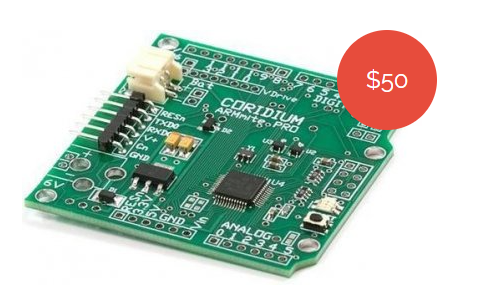
SUPER-PRO Board 100 MHz (LPC1756) – Build a Powerful ARM Cortex-M3 Development Board at Home
The SUPER-PRO Board 100 MHz (LPC1756) is a high-performance ARM Cortex-M3 development board that can be constructed as a Do It Yourself (DIY) electronics project at home. Powered by the NXP LPC1756 microcontroller, this board is capable of handling demanding embedded applications such as IoT systems, robotics, industrial controllers, SDR peripherals, and real-time data acquisition.
In this comprehensive guide, you will learn how to design, build, and use a 100 MHz microcontroller development board using commonly available components. This article is written for makers, engineers, students, and electronics hobbyists who want a professional-grade embedded platform without paying the high cost of commercial boards.
Why the LPC1756 Is Ideal for DIY Embedded Projects
The NXP LPC1756 belongs to the LPC1700 family of ARM Cortex-M3 microcontrollers and operates at clock speeds up to 100 MHz. It offers a powerful balance between performance, power consumption, and peripheral integration, making it a favorite for industrial and commercial designs.
Key Advantages
- 100 MHz ARM Cortex-M3 core
- 512 KB Flash memory
- 64 KB SRAM
- USB 2.0 Full Speed device/host
- Ethernet MAC
- Multiple UART, SPI, I2C interfaces
- CAN bus support
Because of this rich feature set, the LPC1756 is widely used in automation controllers, data loggers, industrial gateways, and IoT edge devices.
What Is the SUPER-PRO Board?
The SUPER-PRO Board is a DIY-friendly development platform designed around the LPC1756 microcontroller. Unlike commercial boards, this design emphasizes:
- Easy home construction
- Through-hole + SMD hybrid assembly
- Expandable headers
- Professional signal integrity
This makes it an excellent choice for learning advanced embedded system design while still remaining affordable.
Board Architecture Overview
The SUPER-PRO Board is built around several functional blocks:
- Core microcontroller unit (LPC1756)
- Clock generation (main crystal + RTC crystal)
- Power regulation (5V to 3.3V)
- Programming & debugging interface
- Peripheral expansion headers
Each block can be tested independently, which greatly simplifies troubleshooting during home construction.
Power Supply Design
The LPC1756 operates at 3.3V, but most hobby power sources provide 5V (USB adapters, bench supplies, power banks). A stable and low-noise power supply is critical for reliable operation at 100 MHz.
Recommended Power Components
- 5V input (USB or DC jack)
- Low-dropout 3.3V regulator (AMS1117-3.3 or equivalent)
- Bulk electrolytic capacitors
- High-frequency ceramic decoupling capacitors
Good power filtering improves ADC accuracy, USB stability, and Ethernet performance.
Clock Circuit – Achieving Stable 100 MHz Operation
The LPC1756 requires an external crystal oscillator for accurate timing. A typical configuration uses:
- 12 MHz main crystal
- 32.768 kHz RTC crystal (optional)
Using the internal PLL, the microcontroller multiplies the crystal frequency to achieve the full 100 MHz system clock.
Proper PCB layout and short trace lengths are essential to avoid clock instability.
Programming and Debugging Interface
To program the SUPER-PRO Board, you can use either:
- ISP bootloader via UART
- JTAG/SWD debugger
For beginners, the built-in NXP ISP bootloader is the easiest method. Advanced users will prefer JTAG or SWD for real-time debugging.
Peripheral Expansion and GPIO Access
One of the strongest advantages of the SUPER-PRO Board is its expandability. All major GPIO ports are routed to pin headers.
Supported Interfaces
- UART (Serial communication)
- SPI (Displays, sensors, memory)
- I2C (RTC, EEPROM, sensors)
- CAN bus (Automotive & industrial)
- Ethernet (via external PHY)
This allows the board to be used in a wide range of real-world applications.
DIY PCB Fabrication Options
You can build the SUPER-PRO Board using:
- Home-etched PCB (for experienced builders)
- Low-cost PCB fabrication services
- Prototype perfboard (limited performance)
For best results at 100 MHz, a professionally manufactured PCB is recommended.
Component List (Affiliate-Optimized)
Core Components
-
NXP LPC1756 Microcontroller
👉 Buy on Amazon | Shopee | Tokopedia -
12 MHz Crystal Oscillator
👉 Amazon -
AMS1117-3.3 Voltage Regulator
👉 Amazon
Development & Debugging Tools
-
USB-to-UART Adapter
👉 Buy on Amazon -
JTAG/SWD Debugger
👉 Buy on Amazon
Software Development Environment
The LPC1756 is supported by several professional-grade development environments:
- MCUXpresso IDE
- Keil MDK-ARM
- GCC + OpenOCD
MCUXpresso is recommended for beginners due to its free license and integrated tools.
Practical DIY Applications
Once completed, the SUPER-PRO Board can be used in:
- IoT gateways
- Industrial monitoring systems
- Robotics controllers
- Home automation hubs
- Educational ARM training kits
This versatility makes it a long-term investment rather than a single-use project.
Conclusion
Building the SUPER-PRO Board 100 MHz (LPC1756) at home is a powerful way to learn professional embedded system design. It combines high performance, flexibility, and affordability into a single DIY project.
Whether you are an engineering student, hobbyist, or product developer, this board provides a solid foundation for advanced microcontroller applications.